Wound Support · REF WS-01
Acute Recovery Gel
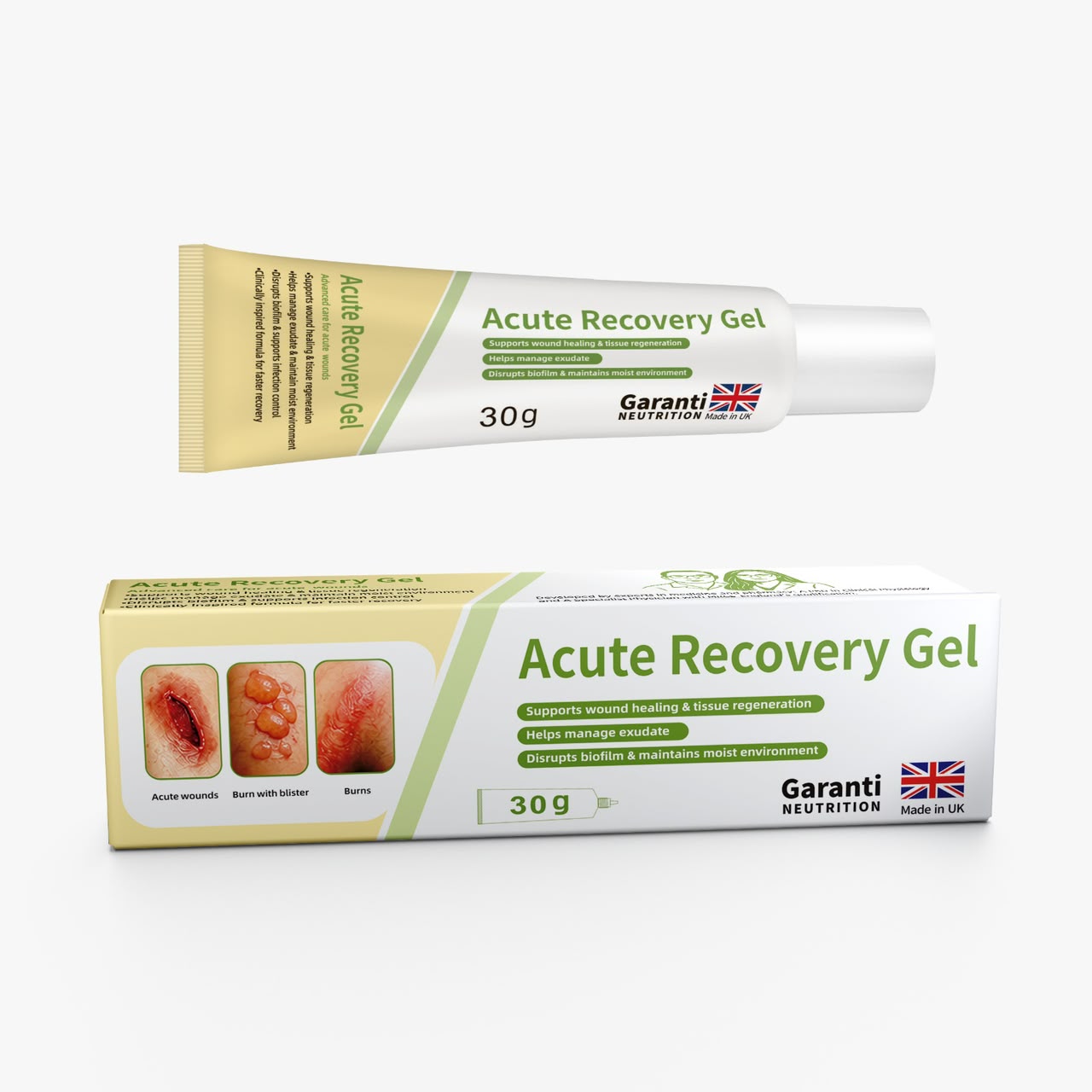
Hydrating wound-support gel for professional management of suitable acute wounds and superficial burns.
A hydrating topical gel formulated to support a moist wound environment in suitable acute wounds and superficial burns. The formula concept combines a hypertonic polyol system with PHMB, EDTA, panthenol, low-molecular-weight hyaluronic acid and allantoin. Intended for professional or professionally supervised wound-care use.
Professional assessment is recommended before use on open wounds. Final regulatory classification determines professional-use requirements by market.
How it works
Modern wound care aims to maintain controlled moisture, protect viable tissue and reduce factors that delay healing. Acute Recovery Gel is designed to hydrate the wound surface, support autolytic cleansing and improve contact between the wound and an appropriate secondary dressing.
The PHMB–EDTA system is included for antimicrobial and biofilm-management positioning. Because antimicrobial wound claims may classify the product as a medical device or medicinal product in some markets, final website language must match the approved product dossier, microbiological validation and local registration.
Potential use areas
- Suitable superficial acute wounds after clinical assessment
- Minor burns and superficial partial-thickness burns where gel management is appropriate
- Wounds with low to moderate exudate requiring a moist environment
- Hydration of dry or sloughy tissue under an appropriate dressing
- Professional wound-care protocols where PHMB-containing gels are indicated
Formula components
| Component | Declared range | Purpose |
|---|---|---|
| Hypertonic Polyol Complex (Glycerol + Sorbitol) | 40–50% | Moisture control, osmotic effect and gel hydration. |
| Panthenol | 5% | Hydration and soothing support. |
| Allantoin | 0.3% | Soothing and skin-conditioning support. |
| Low-molecular-weight Hyaluronic Acid | 0.1–0.2% | Moisture retention and wound-bed hydration. |
| PHMB (Polyhexanide) | 0.1% | Antimicrobial wound-care component; requires validated claim support. |
| EDTA | 0.05–0.1% | Chelating support and biofilm-oriented formulation strategy. |
| Target pH | 4.2–4.8 | Acidic wound-environment positioning, subject to final stability data. |
Directions for use
- Clean the wound according to the healthcare professional's protocol.
- Apply a thin, even layer directly to the suitable wound area or to the selected dressing.
- Cover with an appropriate sterile secondary dressing where required.
- Reapply one to two times daily or at each dressing change, depending on exudate level and professional instructions.
- Do not insert deeply into body cavities or use on severe burns without specialist supervision.
Clinical & safety precautions
- Professional assessment is recommended before use on open wounds.
- Do not use in patients with known sensitivity to PHMB, polyhexanide or any component.
- Do not use in the eyes, middle or inner ear, central nervous system tissue, or other sites where PHMB is contraindicated.
- Seek urgent medical care for deep wounds, heavy bleeding, spreading redness, fever, severe pain, black tissue, electrical or chemical burns, or suspected infection.
- Do not combine with incompatible wound cleansers or anionic surfactants unless compatibility has been established.
- Single-patient use is recommended unless the packaging and applicator system are specifically validated for multi-patient clinical use.
Responsible claim statement
Recommended wording includes "supports a moist wound environment," "supports wound-bed hydration," and "designed for professional wound-care protocols." We avoid claiming that the product independently cures infection, guarantees faster healing, removes biofilm in all wounds, or replaces debridement, antibiotics or surgical care, unless supported by an approved regulatory dossier.
Frequently asked questions
Is this a consumer product?
What does the PHMB–EDTA system do?
Can it be used on severe burns?
Also in the range